
August Daydreams
This month, go outside, relax, and see what comes up.
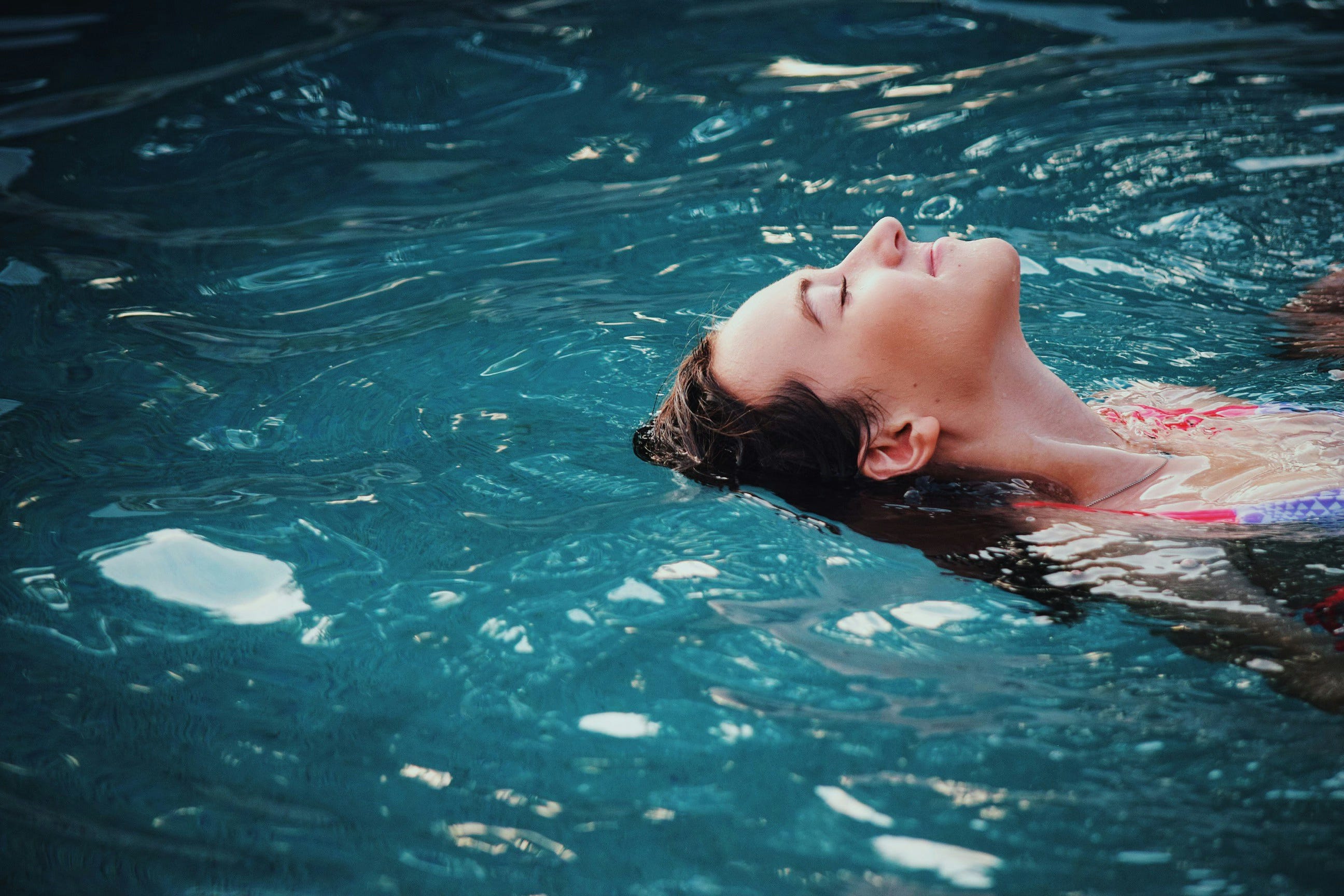
As we head into late summer, I wonder if you are taking a break or slowing down. I am. People are away from their desks more often, and I take advantage.
Summer invites a more expansive kind of thinking. Even when I’m relaxing alone, I get ideas about a problem I’m solving for a client, or a different way to write something for my newsletter.
Daydreaming can be a good way to work, preferably while swimming or basking on a chaise lounge next to a pool. That’s my idea of paradise. Other people have their best ideas for a writing project while gardening, walking, or just sitting outside.
Take a break and do a little self exploration. Put down your phone, go outside and play the “What If…?” game. Bring a pen and notebook if that seems useful. Ask yourself:
What if I could only work three hours a day?
What if I could teach someone else to do parts of my job, especially the parts I like less?
What if I could move myself forward as a food writer?
What if I could find more joy in my current writing project?
Wander around with one of these thoughts for 15 or 20 minutes. Even ideas that seem impractical at first can become useful if they spur some new thoughts around writing, efficiency, and pleasure.
Otherwise, happy late summer. I hope you eat your full of what’s in season: tomatoes, melons, corn, peppers and peaches. Daydream about new ways to cook ingredients, or how to recreate a dish you ate on vacation. And keep these questions in the back of your mind to spur some new ideas around your work.
A New Plan for Office Hour for Paid Subscribers
When I started Office Hours, 40 or more paid subscribers came onto Substack to text with me. Now we’re down to a handful. I think the timing is a problem — not everyone is available when I pick an hour for Office Hours.
I’m trying something new: Office Hours are now open, on the chat, all the time. If you have a question, a comment, or want to discuss something in the news, jump in. That seems to be how it works on other chats I see. I will also share some thoughts and questions. I hope that once we get going, other paid subscribers will participate too. Of course, I won’t be answering instantly, as I did before, but I will definitely respond.
Much Ado About Restaurant Coverage
All of a sudden on Instagram, there are lots of rants from chefs about influencers. Here are a few, with my comments:
@drewthe food guy says influencers have “minimal knowledge” because they have “never worked in the industry.” Hard disagree. Restaurant write-ups are aimed at consumers. Influencers represent the customer. Customers need not have worked in restaurants to know whether they enjoyed their meal.
@chefFaz (Andrew Zimmern) asks when restaurant criticism becomes restaurant advertising. This is a fair question about sponsored writing. We are obligated by federal law to disclose when we have received a free meal or an in-kind gift.
@Chefviveq says “A bad review from an influencer is not criticism. It is damage.” He’s upset when the writer said “something was not right,” after he gave the writer a free meal. That shouldn’t be how it works. He also said the influencer should leave a constructive review, but that’s not how it works either. Influencers write for their audience, not for one chef.
@galleriaofmerrick writes about the “Five most annoying things food influencers do.” This is clickbait. There are bigger issues to complain about than whether an influencer calls a restaurant a “hidden gem.”
@gotofoodpod says food influencers should have to pass a test before they can review restaurants. He selects a chosen few to prove his point.
Some of this complaining is justified, when people slam a small business. But I wonder if this complaining has something to do with male and female dynamics. Women constitute the majority of overall social media influencers and dominate the food and lifestyle content sectors. Is this a coincidence, that the complainers of their work are all men?
What I’m Reading
Let’s start with humor. I laughed out loud when reading This, Too, Shall Pass. It’s about our optimized guts but also about food writing.
A few people alerted me to this posts on Instagram: How cookbook author Sana Javeri Kadri got a $250,000 cookbook deal and was left with $40,000 in debt. It’s shocking, but she fails to mention that the cookbook is a branding tool for her business, so she can write off all her expenses. Also read this, in a similar vein about publishing a book: I Spent $44,000 Launching My Book. Three of Those Dollars Worked. Amy Chan wished she’d spent more on Amazon ads and less on everything else.
Did you see the drama about an influencer copying a recipe for Fruity Pebble's Cake Pops? @hekoreanvegan provides a sage response, that recipes are not protected by copyright.
These Food-Focused Romance Novels Are the Sweetest Reads of the Summer. Chandra Ram chose her picks for Real Simple magazine. Also see this Instagram post on “delicious food history and food studies reads.”
Ian Dingman Believes Cookbooks Should Never Be Boring. Well, who believes otherwise? Here are his spectacular illustrations and designs.
Should You Use Substack for Your Email Newsletter? Or Something Else? Jane Friedman, who writes a publishing newsletter, says there are lots of questions to consider.
How to Ask for a Blurb. You have to do it for your book proposal, and later, before the book comes out.
If you happen to be in Lower Manhattan this summer, Kitchen Arts & Letters, a cookbook store, has a pop-up store.
The Natural-Born Artist. Is there such a thing? Author and writing teacher George Saunders ponders.
How We Pick a Cookbook Cover. Yotam Ottolenghi explains his process.
Well-loved cookery writers #4 Diana Henry. Diana talks about her writing process, in a newsletter that sometimes features food writers.
The craft (and business) of TikTok storytelling, according to author Jason Pargin. How a bestselling author found his voice with short-form video.
Hybrid Publishing vs. Partnership Publishing: What’s the Difference? The Collective Book Studio does a super job if they move forward with your book idea, but it’s costly for authors.
Your Writing Is Enough. A plea from a publisher to stop using AI in your writing.
Taking Inventory. Fifteen cookbook covers that designer Frances Abrantes Baca loves.
The Art of the Book Tour. How a debut cookbook author harnessed culture and community for events.
Sptofy podcast from Cherry Bombe Jubilee, celebrating the 50th anniversary of The Taste of Country Living by Edna Lewis.
There are more than recipes in my beloved cookbooks. A writer finds meaning from friends and family in her book collection.
The Man Who Changed America’s Food. Ruth Reichl writes about one of her heroes and mine, Upton Sinclair. Have you read The Jungle? It’s one of the most consequential books in food writing — ever!
Join Me at These San Francisco Events
Caroline Chambers will discuss her new cookbook, Make it Fast, at the Jewish Community Center on August 20 at 7 p.m. Tickets are here. I’ll be there. My interview, Caroline Chambers Makes $15k+ Per Recipe, about how she rose to the top of Substack’s Food and Drink newsletter list (and stays there!), is my most read post. A ticket costs $45, which includes her book.
The Cookbookery Collective wrote about Martin Sorge in Cookbooks Are for Reading. The winner of The Great American Baking Show will be at Omnivore Books August 27 at 6:30 p.m. to talk about his new cookbook: Modern Classic Recipes from the Midwest. I plan to go. Martin took my three-week cookbook proposal class and also hired me to coach him on his proposal. Free.
I’ll be chatting with the irrepressible Rose Levy Beranbaum at Omnivore Books about her saucy new memoir/autobiography, Ma Vie en Rose, on September 22 at 6:30 p.m. Free.
A Private Consult with Me Anytime
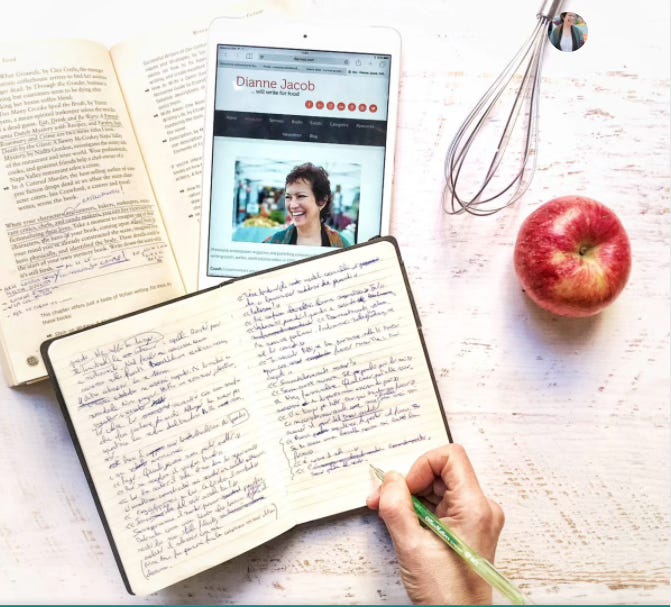
If you want to write a cookbook or food-based non-fiction, get published or find better freelance assignments, I can help move you forward. A one-hour consult costs $250. Email me at dj@diannej.com.
News from Clients and Students
I like to brag about the food writing accomplishments of clients and students. Send me yours at dj@diannej.com.
Southern Living featured Monti Carlo’s cookbook, Spanglish, in its write-up of 7 Cookbooks We’re Looking Forward to This Summer.
Unpacking Japan interviewed Nancy Singleton Hachisu on demystifying Japanese home cooking. (I coached her on her first cookbook proposal.)
The Tastemaker Conference featured Yvette Marguez-Sharpnack on its podcast, on Storytelling and Legacy-Building through Food Content. (I coached her on a cookbook proposal.)
As for me, I made a quick trip to see a friend and colleague, cookbook author Kate McDermott, in Washington State. Here is what she wrote about my visit to Pie Cottage.

My Book

The newest edition of my multiple award-winning book, Will Write for Food: 2021: Pursue Your Passion and Bring Home the Dough Writing Recipes, Cookbooks, Blogs, and More.
Disclosures: I am an affiliate of Food Blogger Pro, Amazon and Bookshop.org. Right now I’m mad at Bookshop.org, because they keep my book on back order. No one can order it, so I’m not linking to them.
Thanks for Reading
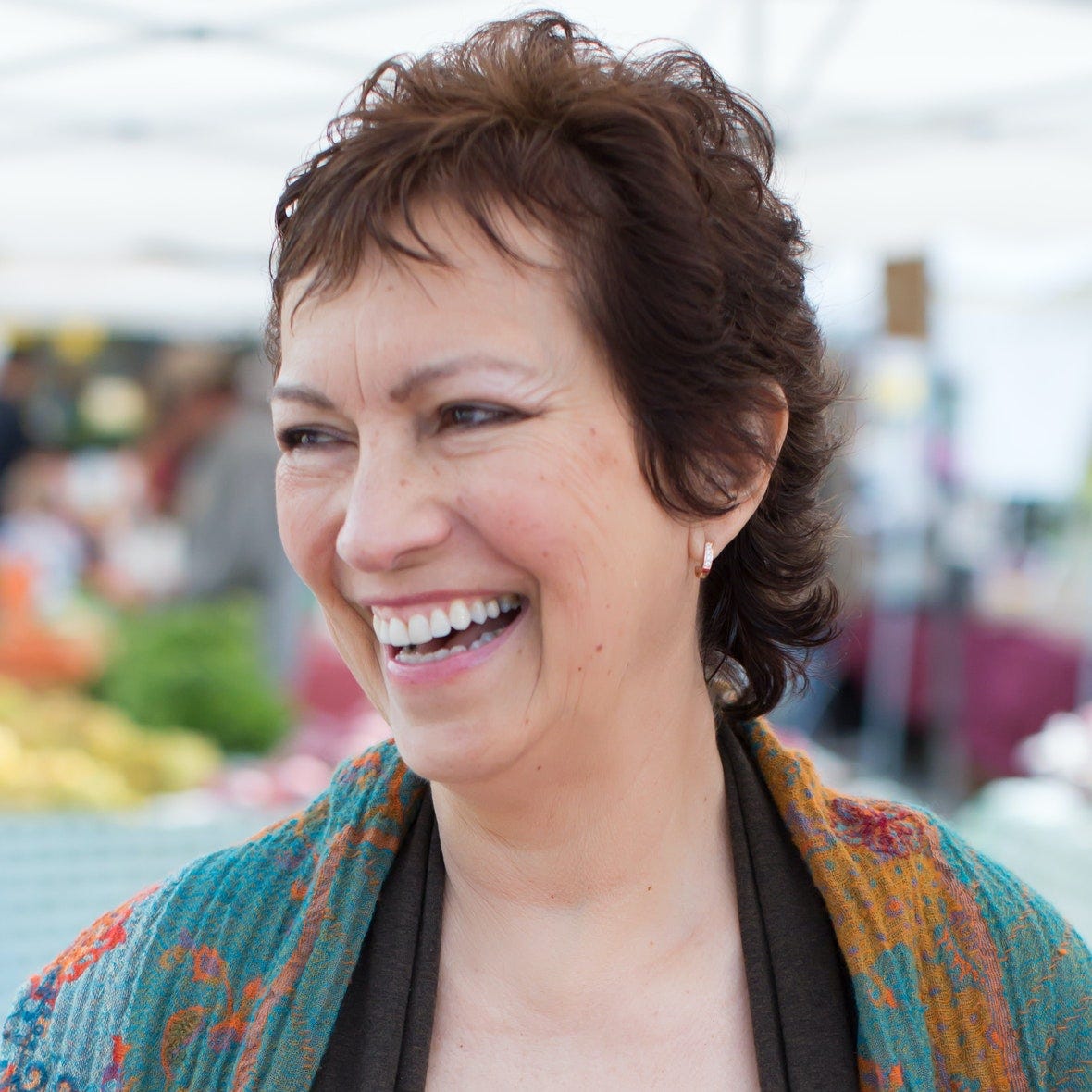
Like this newsletter? Please forward it to a few people or share it on social media. I would really appreciate that. New subscribers can sign up here. Thank you.
If you enjoyed this post, please click on the little ❤️ below ⬇️.
Dianne Jacob
Editor, Writer and Coach
Email: dj@diannej.com
Website: http://diannej.com
X: https://twitter.com/diannej
Facebook: https://www.facebook.com/foodwriting
Instagram: https://www.instagram.com/diannemjacob
See you at Omnivore!
Thanks for the reminder. I will day dream today!