
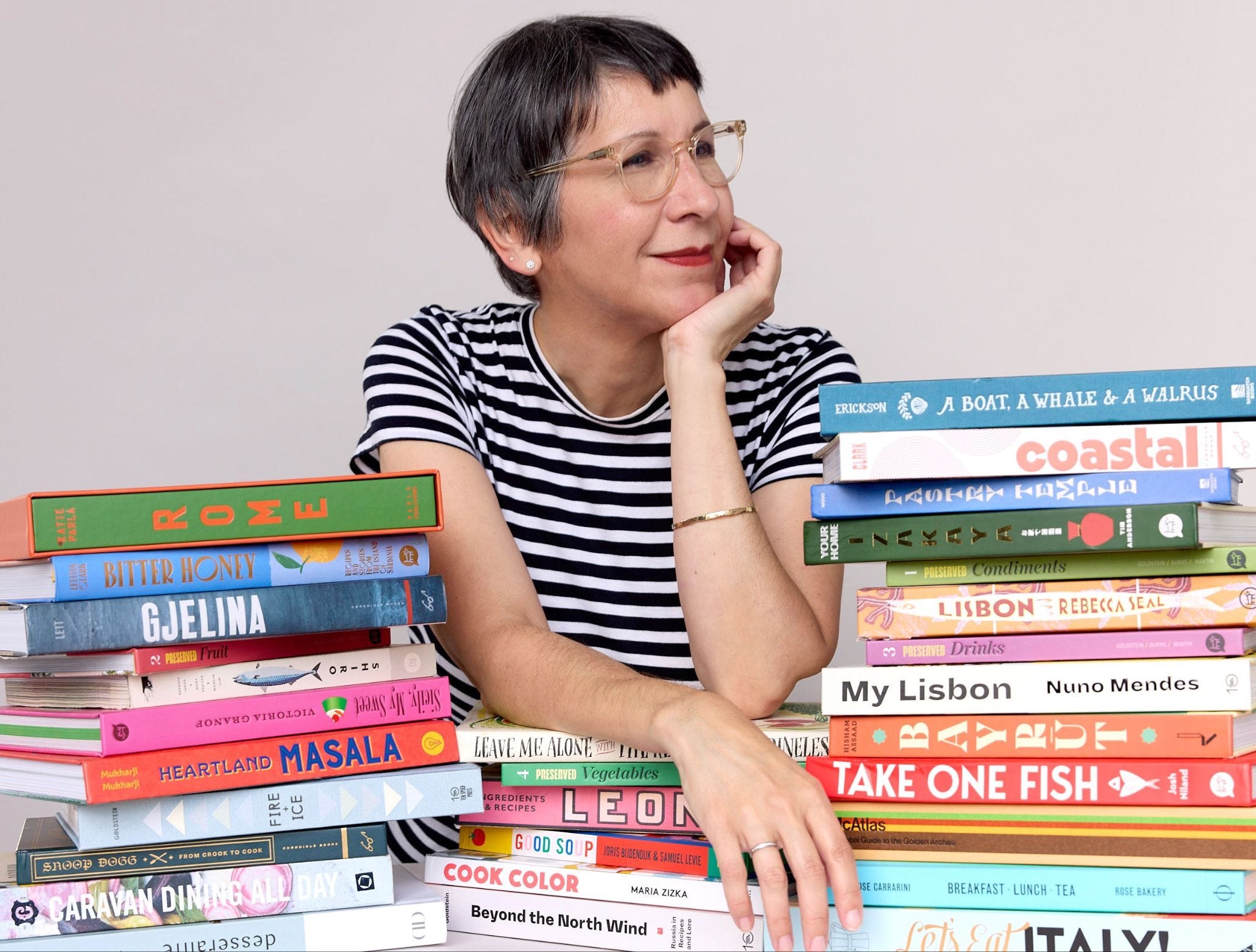
You’ve probably noticed that cookbooks are prettier than ever. Want to know who’s paying lots of attention to that? It sounds pretty niche, but only one newsletter devotes itself to cookbook design. Fortunately, the info is just right for cookbook-obsessed types like us.
So if you haven’t already done so, sign up for Headnotes: Thoughts on Cookbook Design, by creative director and book designer Frances Abrantes Baca. She’s today’s interviewee, and she has lots to say.
Frances studies beautiful design and she’s an expert on how to communicate your design wishes to the publisher. After all, she has been making books for more than 25 years, both as an in-house publishing house employee and as a freelancer.
Her resumé is impressive. Schooling at the famous Rhode Island School of Design, her MFA in Graphic Design gave her the tools to become a book designer, working on art and craft books, gift books, cookbooks and university press projects.
She is also the former president of Sasquatch Books, with a focus on leadership and management. As a consultant, she works with publishers on creative process, team management, and creative operations. Her design work and writing have been recognized by the industry heavy hitters, including the James Beard Foundation, the International Association of Culinary Professionals (IACP), the Society of Publication Designers, and the Association of University Presses.
I met Frances recently over a lunch of salmon crepes and roasted potatoes in the East Bay of San Francisco Bay Area, where we both live.
Here’s Frances on trends that are making cookbooks gorgeous, what excites her most about the work and what authors do wrong when communicating their design needs:
Q. How do you describe your job to writers?
It depends which job I’m doing: creative director or designer.
As a creative director, I assemble and manage the creative resources and team, including designers, photographers, illustrators, and sometimes food stylists that produce cookbooks. I ensure that their work integrates seamlessly with the rest of the production process, and that the goals of the publisher, editor, and author are met while holding space for the creative team to be fully engaged and inspired.
As a designer, I compose the visual package for a book: type, color, image, size, materials, and printing effects. I work closely with the book’s editor and author. I often partner with illustrators and photographers to help develop the book’s art.
Q. What excites you most about your work?
Bringing an author’s words to life through design is incredibly gratifying. It never, ever gets old. I’m really curious about people and love the process of storytelling. It’s a treat to get to know an author and to observe and play off the talents of my partners on the bookmaking team.
Q. What are designers doing these days to make cookbooks so beautiful?
A. Contemporary cookbook design is getting more complex, nuanced, and layered. Designers are enhancing the storytelling aspect of cookbooks by visually calling out details in the narrative or recipes, in the author’s personal story or from the book’s broader context. They also vary page composition, adding more surprise and delight to a reader’s experience.
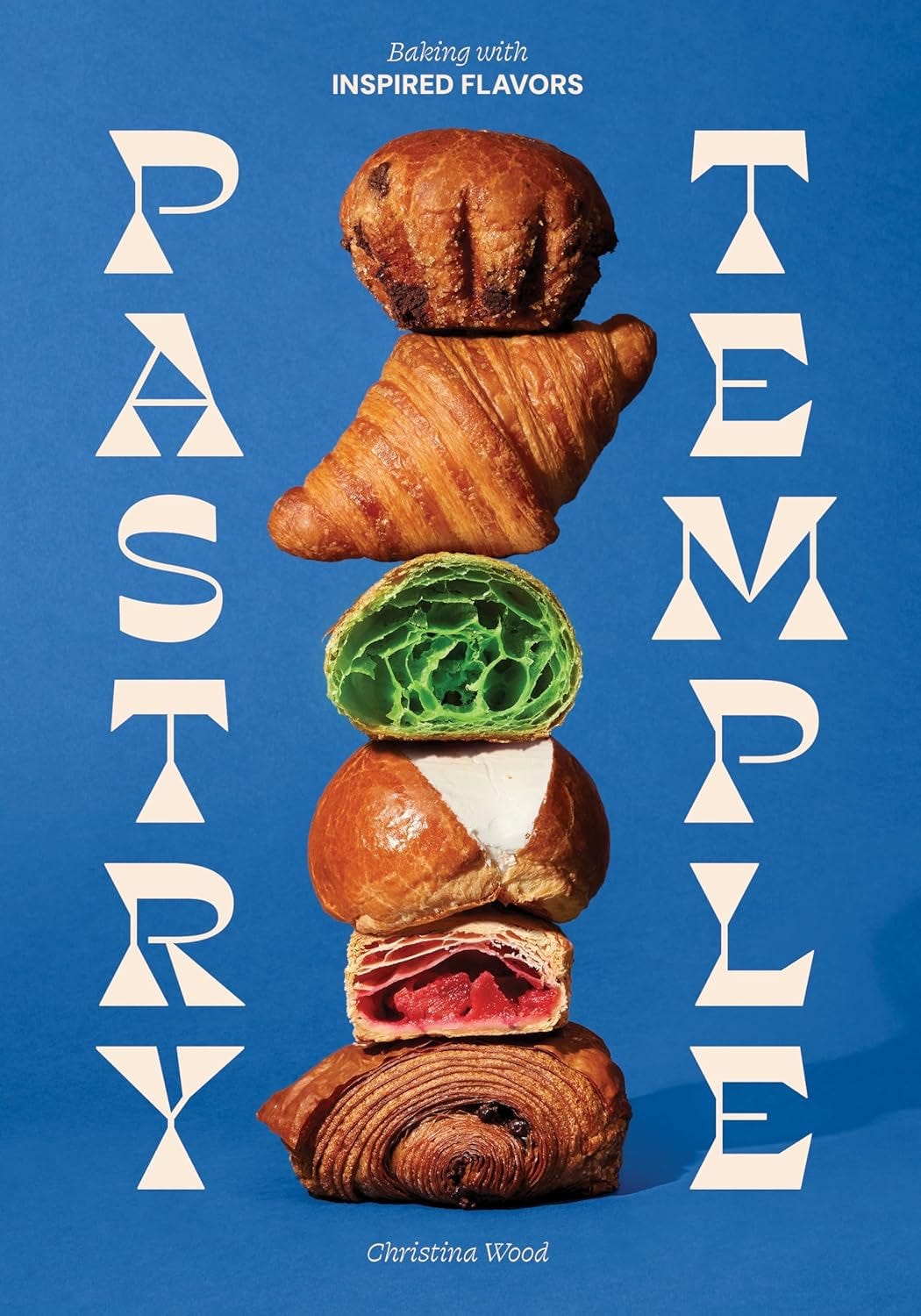
Q. What makes a cookbook cover evocative?
A. Designs with art that speaks powerfully to the culture, histories, or stories a cookbook shares are probably the most effective, especially if the art stirs an emotion or memory in the reader. Typography and color can do this, too, though it takes a very skilled designer to pull that off.